
Seasonal Highlights
While you may know us best as one of the top places to visit for snowdrops in early spring, the garden continuously changes throughout the year
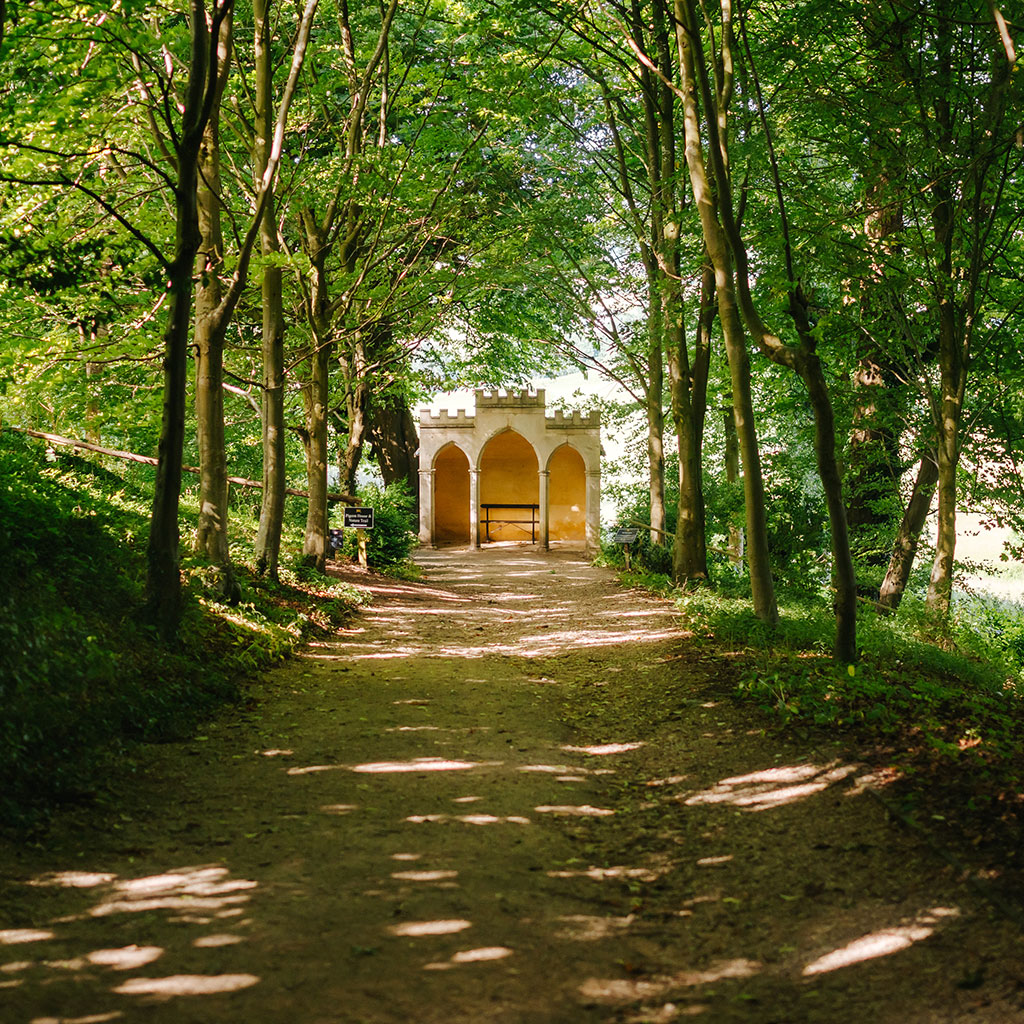

January
The Garden reopens as the first snowdrops are beginning to burst into flower. They usually start flowering in late January, but a mild winter can see them flowering a few weeks early. Follow @rococogarden on social media for the latest snowdrop update.
With over five million snowdrops, the 18th-century Rococo Garden boasts one of the finest displays of naturalised snowdrops in the country. The breathtaking spectacle features at least 15 different varieties, including the creamy, ruffled blooms of Galanthus ‘Lady Elphinstone’ and the green-tipped G. ‘Viridapice’. Among these treasures is G. ‘Lyn’, named after the wife of renowned plantsman John Sales, who discovered it in the woods near Cirencester.
February
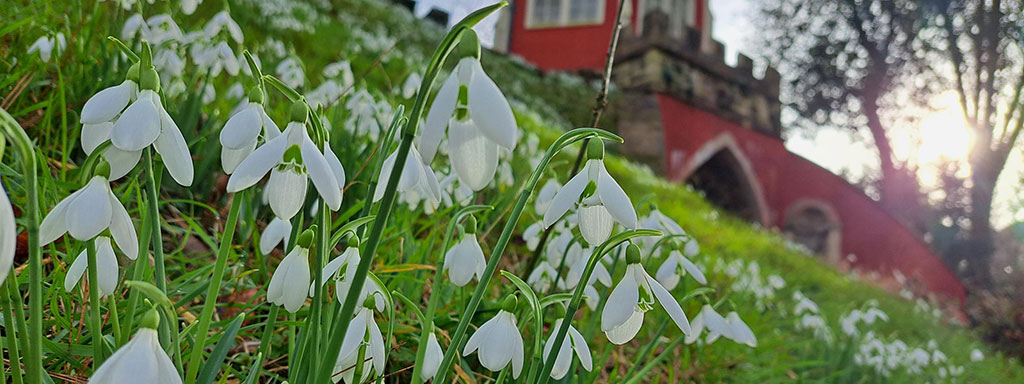
The snowdrops are at their stunning best, carpeting steep banks and woodland glades in pure white and fresh green. Also in bloom are the wonderfully long-lasting cyclamen coum and an array of hellebores, from the deepest purple to the softest cream.
The Garden takes particular pride in its collection of G. ‘Atkinsii’, one of the oldest known hybrids. This variety was named after James Atkins, a Northamptonshire nurseryman and plant hunter who lived in Painswick from 1849 until his death in 1884. Believed to have been collected during a trip to Naples, G. ‘Atkinsii’ was planted in the Rococo Garden shortly after its discovery. It is celebrated as one of the tallest and earliest flowering snowdrops of the new year, with its large, elegant blooms, occasionally graced with a rare fourth petal.
March
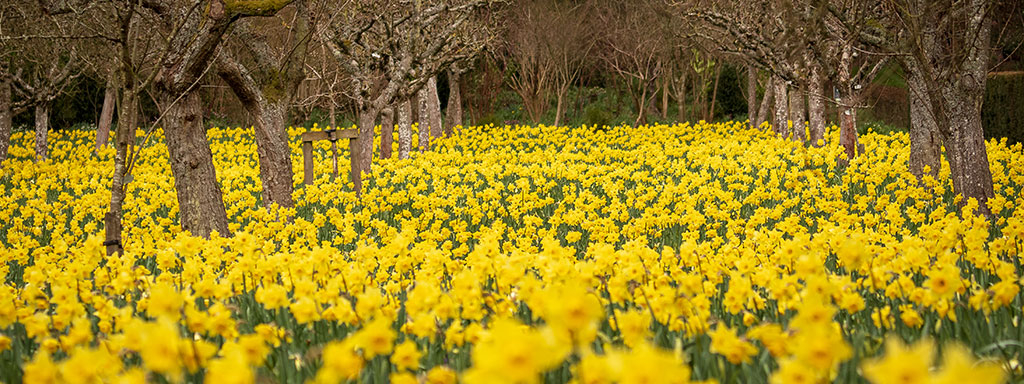
The days are getting warmer and longer, and as the added light brings the garden into life, hellebores and cyclamen are quickly joined by a mass of daffodils, which carpet the orchard and banks at the entrance to the garden.
The garden is transformed into a sea of gold, cream and soft white as around 125,000 daffodil bulbs burst into bloom. Because each variety flowers at slightly different times, the display unfolds in gentle waves, ensuring a magnificent succession of colour across the orchards, banks and woodland.
With one to three flowers per bulb, the garden produces an estimated 250,000 blooms annually – making it one of the largest garden daffodil displays in Gloucestershire.
April
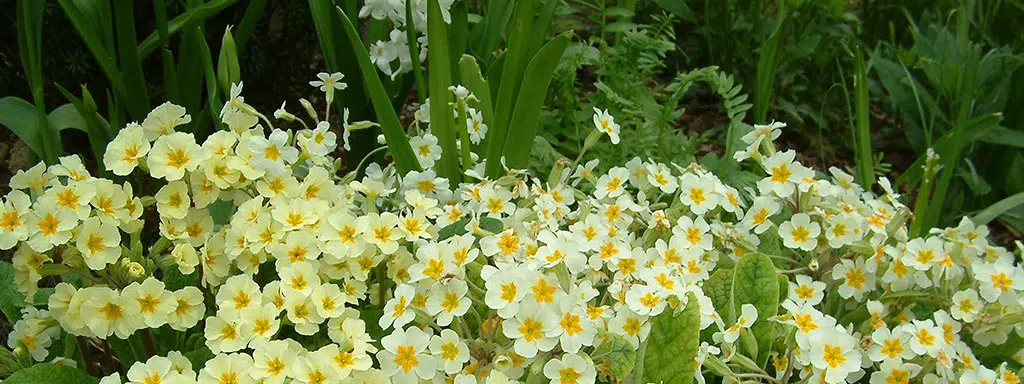
As trees and shrubs regain their leaves, the open views and vistas of the winter months become obscured, and attention focuses on the internal features of the garden.
The display of over 9,000 spring bulbs in the Exedra Garden is especially stunning this month, and cowslips and bluebells can be enjoyed in the wooded areas and meadows.
May
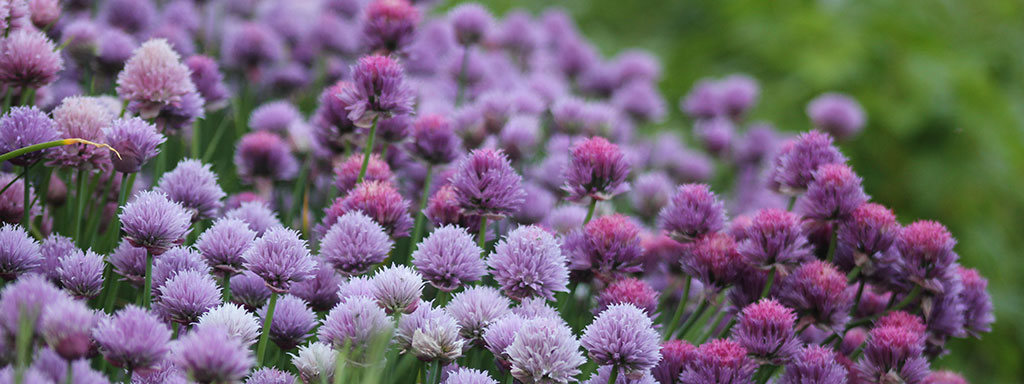
A particularly beautiful time to visit, with an abundance of colour, fresh growth on spring shrubs, and aquilegia flowering in both the meadow and flower beds. (The common name for aquilegia is columbine – from the Latin for dove – as their young flowers look like a group of doves.)
Eye-catching blue and yellow clumps of upright iris appear towards the end of the month, and the scent of Sweet William fills the Exedra Garden.
Meanwhile, wild garlic in our shady woodland provides us with a bountiful crop of fresh leaves for our café to use, as do other leaf crops from the Kitchen Garden.
June
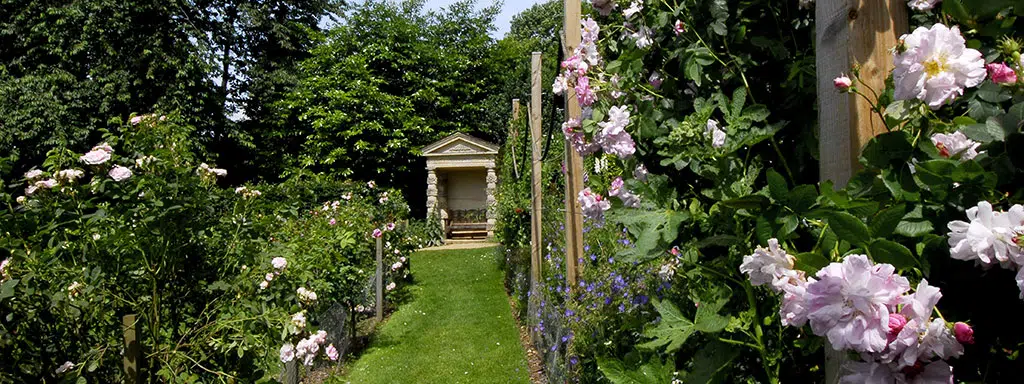
Our blousy, fragrant display of heritage roses begins to bloom in the Exedra Garden, alongside perennials such as lavender. Early salad crops from the kitchen garden make their way to the café, with the promise of much more to come, as our wildflower meadow fills with orchids. If you’re lucky, you may even discover a rare bee orchid – the first of which was spotted in 2013.
Look out for small bunches of grapes beginning to form in our vineyard, and day lilies in fiery shades of yellow, orange and red.
July
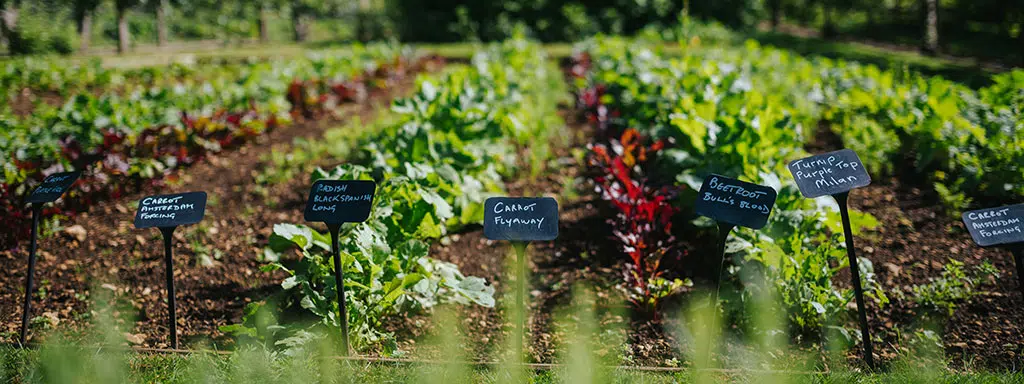
Shaded walks provide a respite from the scorching sunshine, in what is often the hottest month of the year. In the Exedra Garden, our heritage roses continue to bloom, and hollyhocks provide height to the borders. The heady scent of summer flowering jasmine is abundant, and a plentiful supply of seasonal produce from the kitchen garden means delicious fresh dishes in our café.
August
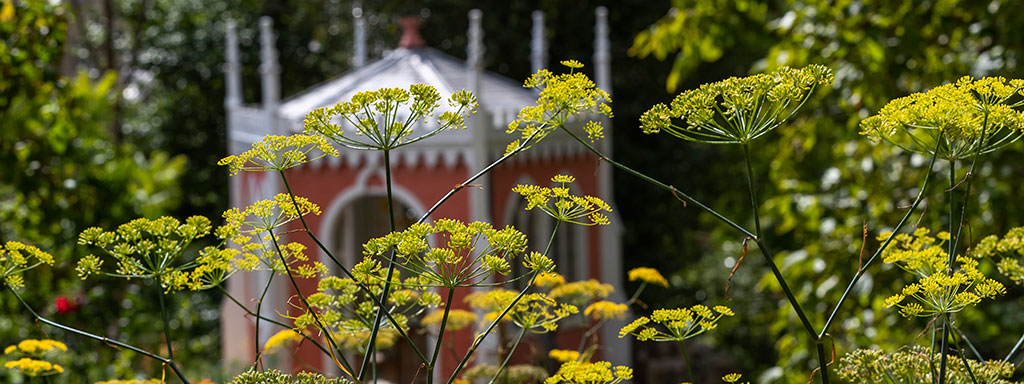
The perfect month for lazy summer days spent exploring, playing hide and seek, or reading in the dappled shade. New growth on trees and shrubs heightens the garden’s vistas, as you catch glimpses of the follies waiting to surprise you around the corner.
Summer warmth encourages late-flowering plants to bloom, before autumn cyclamen appear later in the month, as a hint that cooler days are approaching.
September
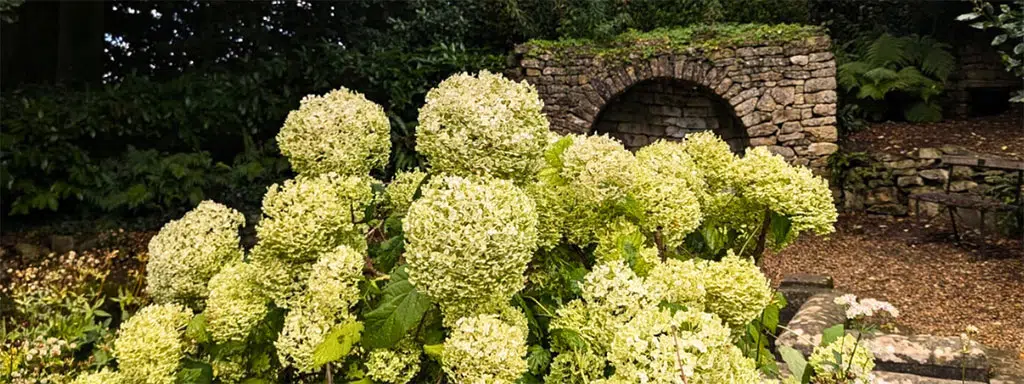
This month sees a crescendo of colour in the Exedra Garden, where perennials and annuals provide a magical display, including African marigolds. All around the Garden, trees are beginning to turn magnificent shades of red and gold.
Elsewhere, the extensive crop of heritage fruits in the kitchen garden swells and ripens as harvest approaches. Apples and pears grown in the garden are used by our café, with surplus being turned into fresh-pressed and pasteurised juices – ready to sell to visitors in our shop.
October
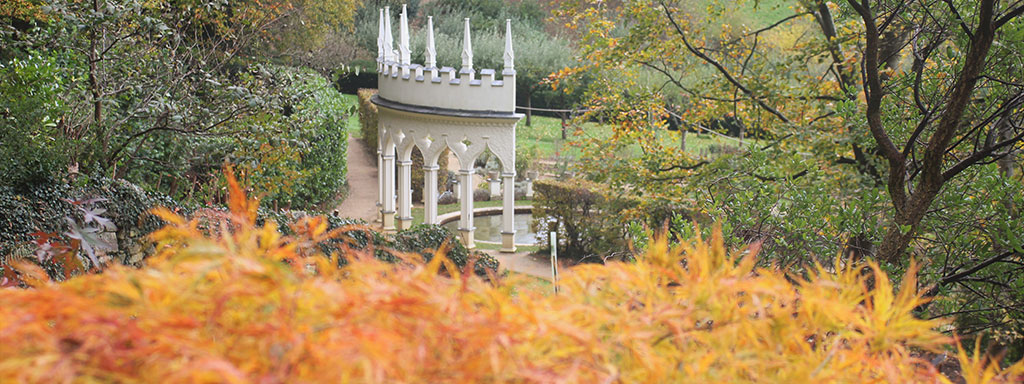
As the evenings draw in, the scarce days of spectacular autumn sunlight become even more precious. The colourful flowers in the Exedra Garden continue to bloom until the first frosts, and the autumn leaves of native and exotic tree species look particularly spectacular this month, as they begin to turn to warm golds and reds, revealing more of the garden wildlife as they fall.

November
The days are getting shorter as the garden prepares to go into hibernation over the winter.
Our deciduous trees are shedding their leaves fast, and the skeleton structure of the garden is revealed as they fall. Structural seed heads throw shapes around the garden, illuminated by a combination of morning dew and low winter sun.

December
During December, the garden turns its attention to its nocturnal wildlife, revealing a different side of this historic landscape after dark.
Enchanted Garden by Night is an intimate, atmospheric winter lights trail where nature comes alive through enchanting illuminations, woodland animals and twinkling surprises.
Follow a gently twinkling trail beneath the trees and explore an enchanted woodland world inspired by the creatures that emerge after dusk. Along the way, illuminated follies and unexpected details bring the garden to life in a whole new way.
A quiet, charming take on a winter light experience, Enchanted Garden by Night celebrates the garden’s rich history of entertaining guests with splendour, playfulness and a sense of wonder, while shining a light on the wildlife that makes it so special. Pause to listen and you may hear the owl’s gentle hoot or the sound of the brook winding through the garden.
A chance to experience the garden’s history, wildlife and winter beauty after dark.

